Siemens needs to test much of its wind turbine development. However, as it is both expensive and space-consuming to have a park of wind turbines available—and you are also dependent on wind and weather—we instead developed a wind turbine simulator that took up less space and was easier to duplicate than a physical wind turbine.
By combining real-time software and hardware, we created a wind turbine model that enabled Siemens’ developers to test their own development projects without access to a physical wind turbine. At the same time, the simulator had to be parameterized so it could be configured to simulate many different wind turbine variants. Key parameters for both Siemens and us were that the simulator had to be robust so it could run for long periods without being restarted, and that it had to provide an API for automation.
Siemens needed to test and develop wind turbine functions, but physical testing on real turbines is expensive, space-consuming, and dependent on wind and weather.
A flexible and scalable test platform that makes it faster, cheaper, and easier to test and develop new functions—while also improving quality and operational reliability.
Development of a real-time wind turbine simulator based on LabVIEW, PXI, real-time controllers, and FPGA, with more than 30 parameterized models and a flexible configuration system.

Our wind turbine simulator has made it easier, cheaper, and faster for us to test different functions, and it has also had a major impact on improving our quality and operational reliability. To give a couple of examples, this happens when we validate various software functions or when we test new elements in R&D.
– Siemens
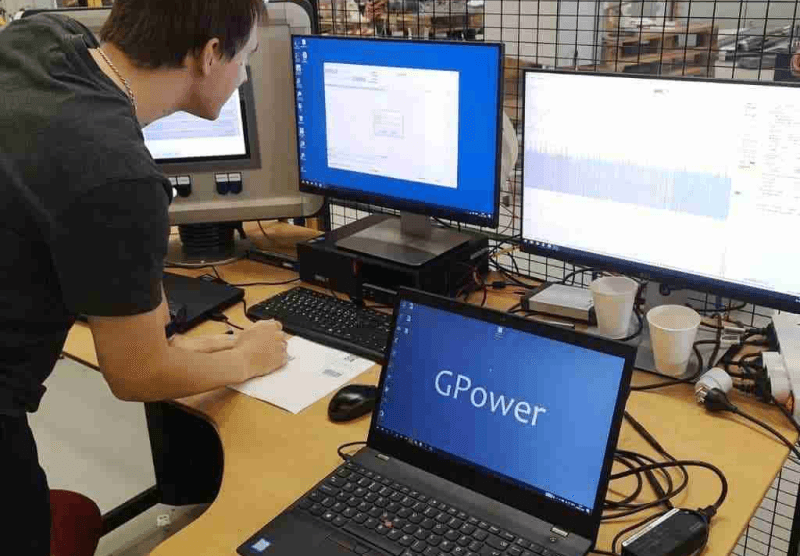
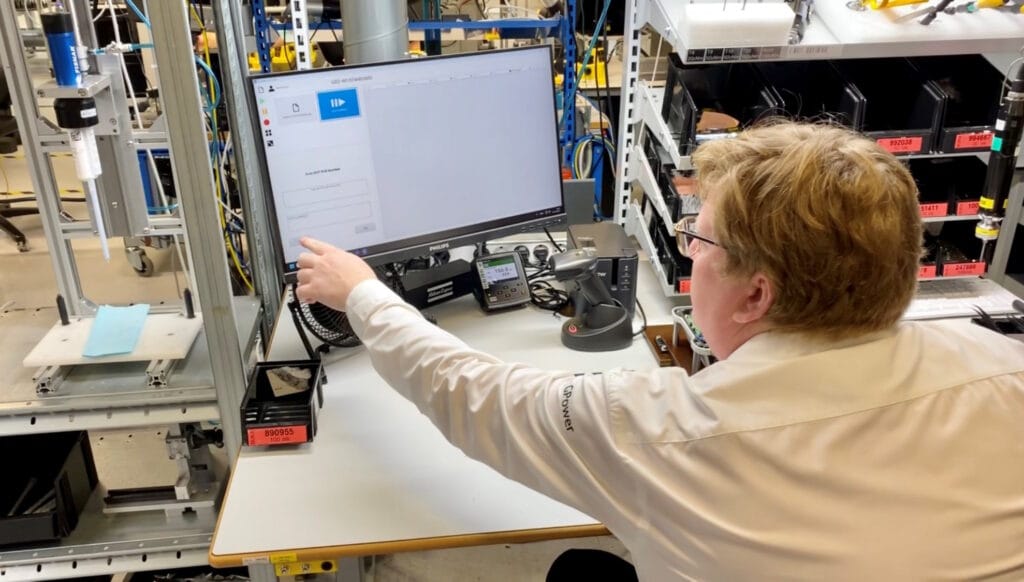
For a single wind turbine simulator to fulfil the roles described above, extensive know-how in wind turbines, software design, and hardware is essential. In addition, timing is critical, as more than 1,000 electrical signals must work together, some within nanoseconds. To meet these requirements, we used several types of computer systems, including desktop, real-time controllers, and FPGAs. On the software side, there are more than 30 parameterized mathematical models as well as a flexible configuration system to start the exact right turbine profile.
The wind turbine simulator is a project we continuously develop in collaboration with Siemens. In this context, it is crucial that the simulator has a high degree of modularity on both the software and hardware sides. This allows us to continuously add and change functionality based on requests and needs. For example, hardware modularity means we can switch platforms and add signal types as requirements change, while software modularity means we can, for instance, virtualize parts of or the entire simulator.
When we build simulators, our approach is to use software where possible and hardware where necessary. This case clearly illustrates the flexibility of our design, as the implemented simulators range from one-ton Hardware-in-the-Loop simulators (HIL) based on multicore PXI controllers and FPGA PXI cards, to pure software simulators and virtual environments. In all cases, the simulators are configured with the same parameter set and the same API.

How can we test and develop new functions for our wind turbines without relying on expensive physical turbines and changing wind conditions?
– Siemens